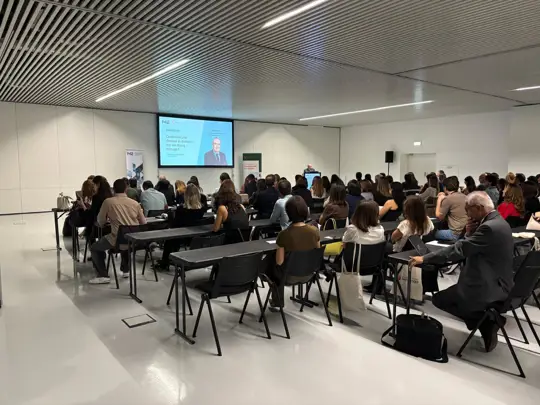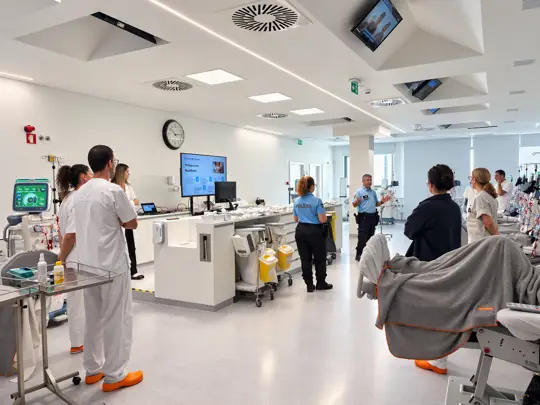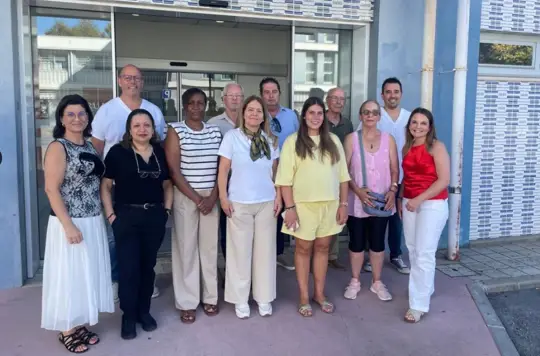
The fifth edition of Diaverum Portugal’s Caregiver Project concluded in Porto on 1 October, bringing together 10 caregivers of patients receiving treatment at the Prelada and Boavista clinics.
The initiative highlights the importance of providing close, personalised support to those who take on the daily responsibility of caring for others.
Some projects clearly demonstrate the vital role caregivers play and the impact that ongoing, personalised support can have on their daily lives. Access to the right information, appropriate support and knowledge of available community resources can make a significant difference to those who provide care.
With this purpose in mind, Diaverum Portugal held the fifth edition of its Caregiver Project in Porto, involving caregivers of patients receiving treatment at the Prelada and Boavista clinics.
This edition welcomed 10 caregivers, with a 100% attendance rate and no absences. Beyond the numbers, these results highlight the importance of creating spaces where caregivers can be heard, ask questions, share experiences and discover support services that can help them in their daily lives.
Across the five editions held to date, the project has involved more than 50 caregivers from across Portugal, maintaining a 100% attendance rate with no dropouts. This track record demonstrates the importance of continuing to invest in initiatives that connect caregivers not only with healthcare teams but also with the support services available in their communities.
For Joana Dantas and Susana Ribeiro, the social workers responsible for organising and facilitating the initiative, “organising and supporting the ‘Nós Família’ project has been a very enriching experience, both personally and professionally. It has created a space for sharing, listening and supporting caregivers. Through this project, caregivers’ needs have been recognised, their role valued and their quality of life supported.”
Bringing the community closer to caregivers
The project involved the interdisciplinary teams from both clinics and aimed to establish direct connections between caregivers and various community organisations.
This edition welcomed Dr Fernando Paulo, President of the Porto District Social Security Institute, as well as representatives from the Pedrouços Parish Centre, the Santa Casa da Misericórdia do Porto de Paranhos, the Portuguese Red Cross, Obra Diocesana do Porto and LBV – Legião da Boa Vontade.
The experience and knowledge shared by these organisations helped connect caregivers with existing social support services and facilitate access to resources better suited to the needs of each individual and family.
This collaboration is particularly important in identifying practical solutions that can help reduce the strain, exhaustion and burden associated with caregiving. By bringing caregivers, healthcare teams and community resources closer together, it becomes possible to identify and activate support solutions that are more accessible and tailored to each situation.
Diaverum Portugal would like to thank all partners for their availability, participation and contribution to this edition of the project.
Special thanks go to Joana Dantas Coutinho and Susana Ribeiro, the interdisciplinary teams at the Diaverum Prelada and Boavista clinics, and their respective clinical leadership teams for their ongoing support and for making space for initiatives such as this: Dr Inês Ferreira and Head Nurse João Fidalgo at the Prelada Clinic, and Head Nurse Olivia Santos and Dr Ricardo Neto at the Boavista Clinic.